Margie Dillion on Building Trust, CX, and Automation in the Insurance Industry
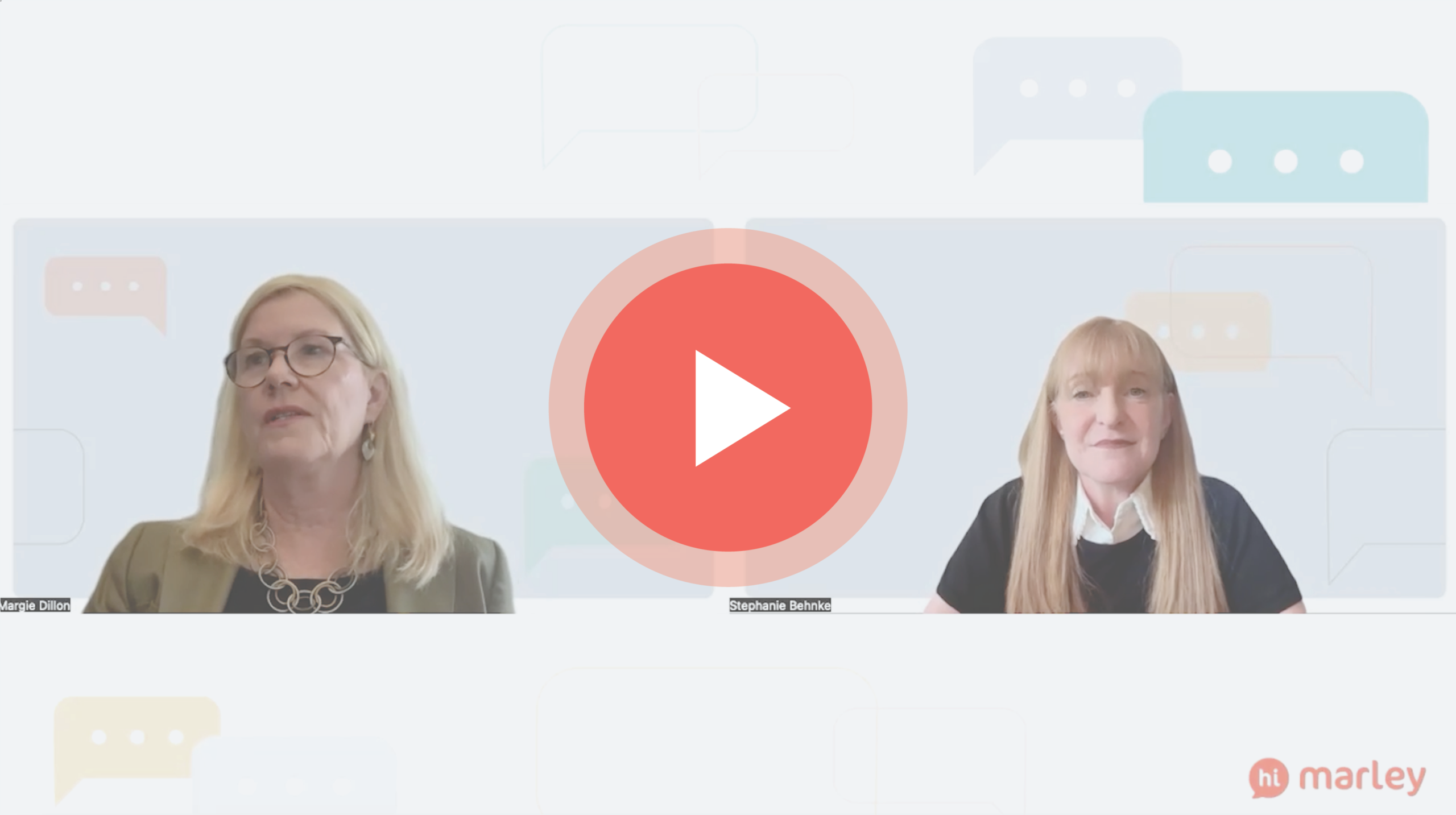
In this episode of Conversations That Connect, Hi Marley’s Stephanie Behnke sits down with Margie Dillion, former CFO and Chief Customer Officer at Liberty Mutual and current Hi Marley Board Member.
Their discussion centers on how insurance leaders can ensure a positive customer experience in the age of automation.
Customer Experience in the Age of Automation
Stephanie begins by asking how the insurance industry can use automation and AI tools to improve the customer experience, not just make it faster. “The key is listening constantly, and getting customer feedback,” Margie shared. “I’m a huge fan of intentionally designing the customer experience.”
But what makes a great customer experience? For Margie, it’s about meeting the customer where they are, in line with their personal communication preferences. While some people may prefer managing their claim entirely online with minimal interaction, others want to talk to a real person throughout the process.
“There’s not just one ideal customer experience. They vary widely,” Margie explains. “But overall, it’s about fair treatment of the claimant. Claims shouldn’t take an exorbitant amount of time. Whether it’s via a human or technology, communication has to be clear and set realistic expectations. While customer experience metrics can also vary by carrier, customer retention is the ultimate measure.”
Building Trust with New Technology
In an industry where trust is paramount, aligning customer experience with customer expectations can be challenging. Margie believes this is partly due to the product itself. “Insurance isn’t tangible,” she said. “It’s a promise. Customers don’t always understand what they’ve bought.”
If a customer files a claim and discovers their policy doesn’t provide the coverage they expected, for example, rebuilding that trust is difficult.
Margie believes AI can play an important role in addressing this challenge. By helping customers better understand their policy at the time of purchase, insurers can build trust earlier and set realistic expectations from the outset.
“Transparency is important. Customers need to understand their policies, gaps, and risks,” Margie explains.
Beyond customer education, Margie believes automation can help streamline communication across the various parties involved in settling a claim. “This will go a long way to improving the customer experience,” she says.
Striking a Balance Between Automation and Empathy
Stephanie shares that she often hears industry professionals wondering where to draw the line between automation and empathy.
“I personally think there’s a certain severity of claim that shouldn’t be automated,” Margie agreed. She believes each carrier must draw this line based on its unique company culture. They should ask themselves, what is our brand promise,what are our automation goals,and which claim situations should always warrant human interaction?
Stephanie adds that insurance companies should view these claims holistically. “You might be able to automate some parts of that claims process, but in cases like total home loss or severe bodily harm, you should make sure the claimant can connect with a real person at the start of the claim.”
Improving CX Through Data Management
Insurers have access to huge amounts of data—often, the challenge is finding the relevant data for a specific customer interaction. Margie and Stephanie agree that this is another area where automation tools have unlocked potential.
“The key is orchestrating that data so it’s a useful tool for the insurance professional interacting with the customer,” Margie said.
“Technology can help us find the information that’s relevant at the right moment, so the insurance professional has the information they need to respond to the customer with more accuracy and efficiency,” Stephanie added.
Stephanie ends by asking Margie to share one key takeaway from their discussion, and Margie returns to the importance of customer feedback. “Insurance professionals should really look at the customer experience data,” she says.
“Be honest about where the pain points are and what the customer is telling you. Revise the data, continue listening to the customers, and develop a strategy to resolve those issues.”
Watch the Full Episode